A hidden champion builds a brand from the outside in: first learn what buyers and investors actually say about the company, and only then decide what to claim and where to say it. That is the order we followed at Geber with six Taiwanese B2B manufacturers, SAI, LAGIS, Wafer Works, Kinetics, TAYA Chain and AMEC, in projects carried out between 2011 and 2024.
All six lead a narrow market, and none was a young company. The oldest, TAYA, was founded in 1969; the youngest, AMEC, in 2006. Each was between 14 and 45 years old when its project started. What most lacked was a name that meant something to people outside the circle of existing customers.
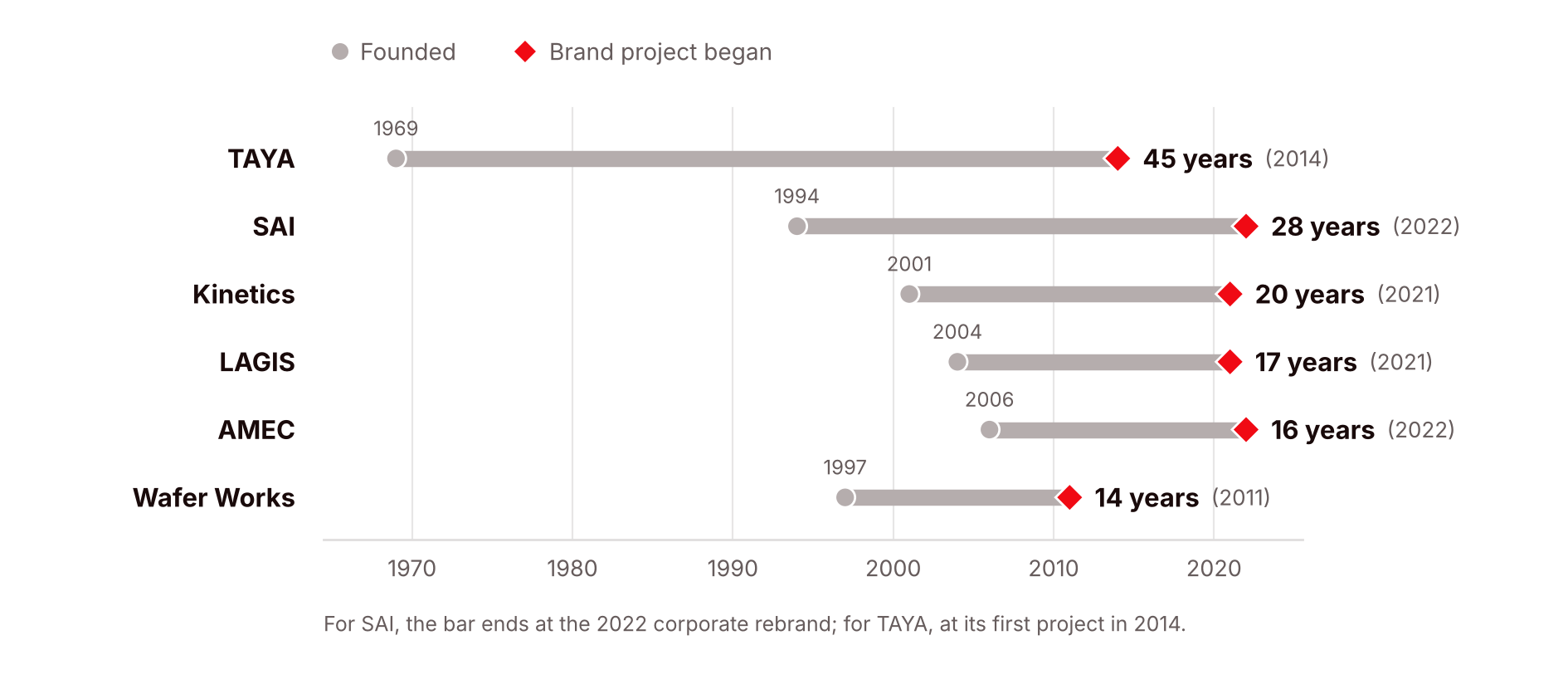
Ask an AI assistant how Taiwan’s hidden champions build brands and it answers with Giant, HIWIN and Advantech. Readers already know those names. The six here are companies most readers have never heard of, which was exactly the problem each had to solve. (For moving from contract manufacturing to your own brand, see our guide to manufacturing brand transformation. This article is about getting a niche leader known.)
What a hidden champion is, and why the brand problem is part of it
The German management writer Hermann Simon coined the term in 1990. Low public awareness is part of his definition, alongside market leadership and size, so every hidden champion starts with a brand problem built in. Most of the time, that costs nothing: your customers know you, and the orders keep coming. The cost appears when the company needs someone who doesn’t know it yet, such as an investor before a listing, an overseas buyer for the company’s own product line, a bike shop deciding which chain to fit, or an engineer holding an offer from one of Taiwan’s biggest technology companies. Each of them will look the company up before the first meeting, and what they find is all they have to judge it by.
Taiwan has its own version. The Ministry of Economic Affairs (MOEA) runs its Mittelstand program (中堅企業), using the German term for mid-sized industrial firms. Brand is one of its five selection criteria. SAI and GIFU appear on its list as 潛力中堅企業 (potential Mittelstand companies).
The press has used the hidden champion label for several of our clients. In April 2024, a month before SAI’s listing, TechNews called SAI a Taiwanese hidden champion. In October 2025, a Global Views Monthly headline said LAGIS had grown into a hidden champion of minimally invasive surgical devices. Business Weekly called GIFU, the Taichung maker of tool magazines for machine tools, a low-profile hidden champion in 2021. We made GIFU’s science fiction film in 2020, and the film has its own article.
I also count T-Global and United Orthopedic (UOC) as hidden champions. T-Global is a thermal management maker in Taoyuan whose direct customers grew from more than 2,500 in 2019 to more than 7,500 today. UOC’s own website says surgeons in 52 countries now trust its products, up from more than 20 in 2017. CommonWealth introduced UOC as a hidden champion in a podcast episode in June 2026. (Even in Simon’s hidden champion lists, market position rests on what the companies themselves report, so every ranking in this article is given as the company’s own claim.)
Known to buyers, unknown by name
By its own count, SAI is the world’s second-largest maker of forged wheels, yet in 2022 its brand still introduced it as a supplier. In our interviews that year with SAI’s customers and sales representatives, buyers across the industry knew SAI and recognized its red logo. Asked what set SAI apart, they had no clear answer.
One director at a customer found SAI low-key, a company that only ever talked about its technical ability. The director said that even inside the car industry, many people didn’t know Taiwan’s hidden champions. The customer ended up helping to promote SAI.

The same pattern showed up in other industries. AMEC makes Automatic Identification System (AIS) equipment, which ships use to broadcast their position, and much of it is sold under other companies’ brands. In 2022, one distributor said AMEC products were widely used, yet most customers didn’t know the AMEC name. At Wafer Works in 2011, investors were unsure which industry to place the company in. At Kinetics in 2021, about half of the buyers interviewed said they would choose an international brand for critical equipment. The product had earned its reputation years earlier; the name had never caught up.
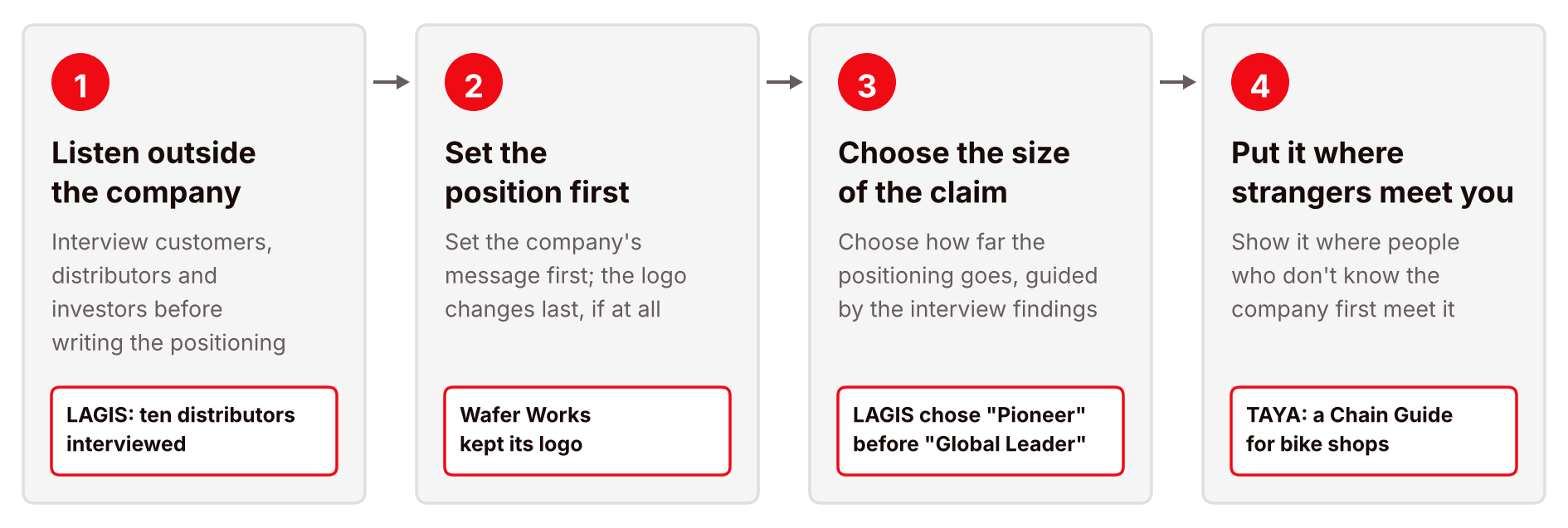
Step one: listen outside the company
We began each of these projects by running interviews with people outside the client’s company, before any positioning line or logo. For LAGIS, that meant ten distributors in Europe and Asia, and for Kinetics, nine customers at refineries, petrochemical plants and power plants. We also spoke with four investors for Wafer Works and with bike shops and distributors in North America for TAYA.
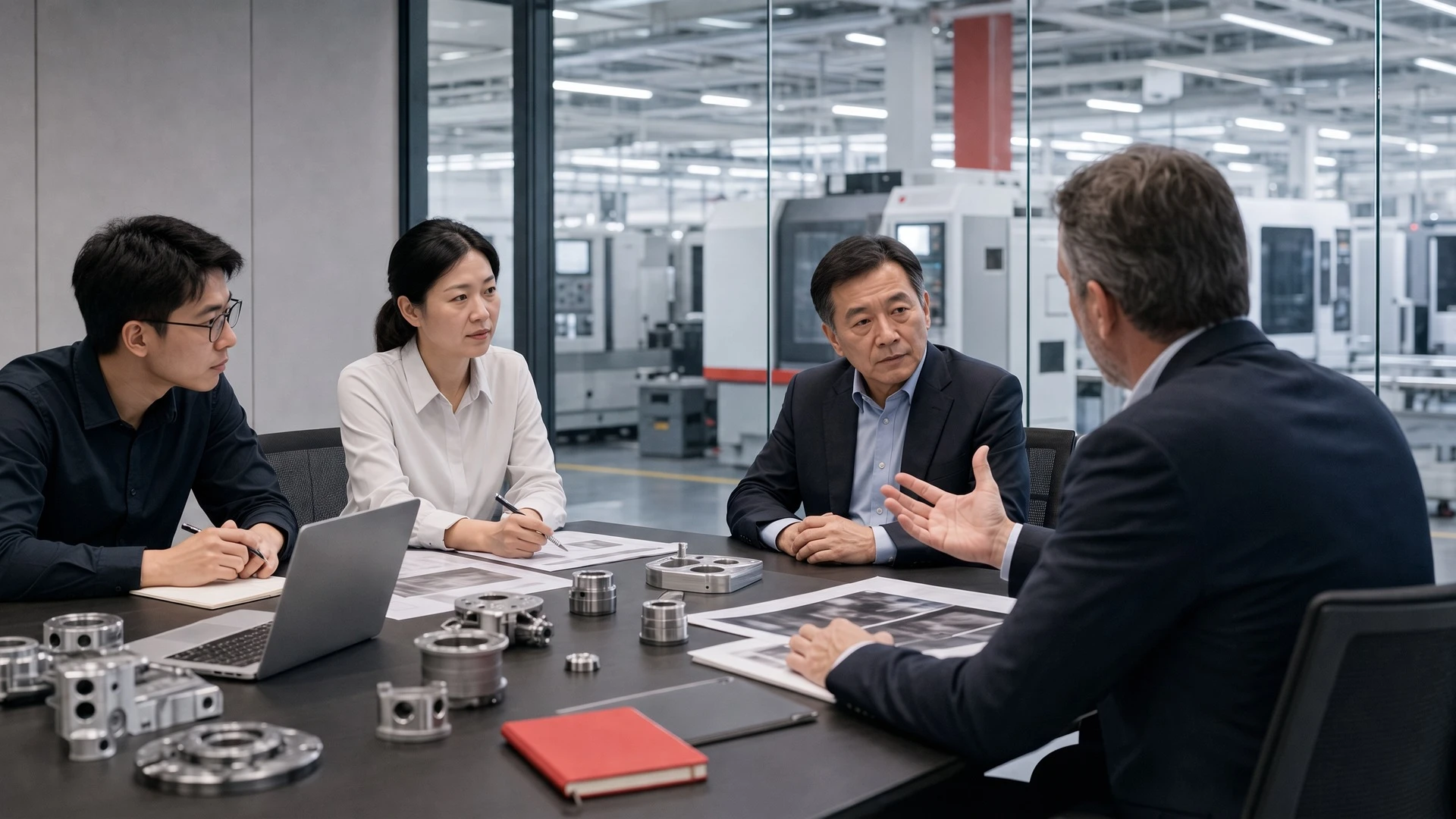
Our rule is that every line of the positioning must trace back to something someone said, because after 30 or 40 years a company knows its product far better than it knows its buyers.
TAYA shows most clearly why the outside interviews matter. By its own account, it is Taiwan’s oldest bicycle chain brand. By 2014, it was exporting about 90 percent of its output, yet the bike shops and riders who choose a replacement chain knew little about it. Rust protection was the feature TAYA was proudest of. In late 2014, North American shops and distributors told us rust rarely worried their riders. They knew TAYA as a good basic replacement chain, and few saw it as a performance upgrade.
LAGIS heard something similar in 2021. Distributors expected quality on a par with the global majors and treated it as the starting point. What they praised was how fast LAGIS responded and its willingness to adapt a product to a surgeon’s feedback. LAGIS had never talked about either. The strength a maker prizes most is often one its buyers take for granted.
Step two: settle the position before touching the logo
The logo is what everyone can see, so companies want to start there. In these projects, it was usually the last thing that needed changing.
Wafer Works kept its logo. Our 2011 and 2012 project, run under Geber’s earlier name, Affinity-Asia, worked on what the company says about itself: a vision, five values, a positioning and a system to manage the brand. Fourteen years later, the vision is still the headline of Wafer Works’ LinkedIn page and the banner of its English website: “To become the Customer-Centered Solution Provider of Semiconductor Materials.” Its Chinese version still opens the company’s About page and appears in the business philosophy section of its 2025 sustainability report.

SAI and Kinetics refined their existing logos, while LAGIS created a new one around a new bird symbol and kept its red color. In all three cases, the logo work started only after the position was set. In our article on when to rebrand, the client kept its logo in seven of the 16 rebrands counted.
Step three: decide how large a claim to carry
Taiwanese makers that lead their niche are often reluctant to say so, as I’ve written about before, so the size of the claim has to be a deliberate choice.
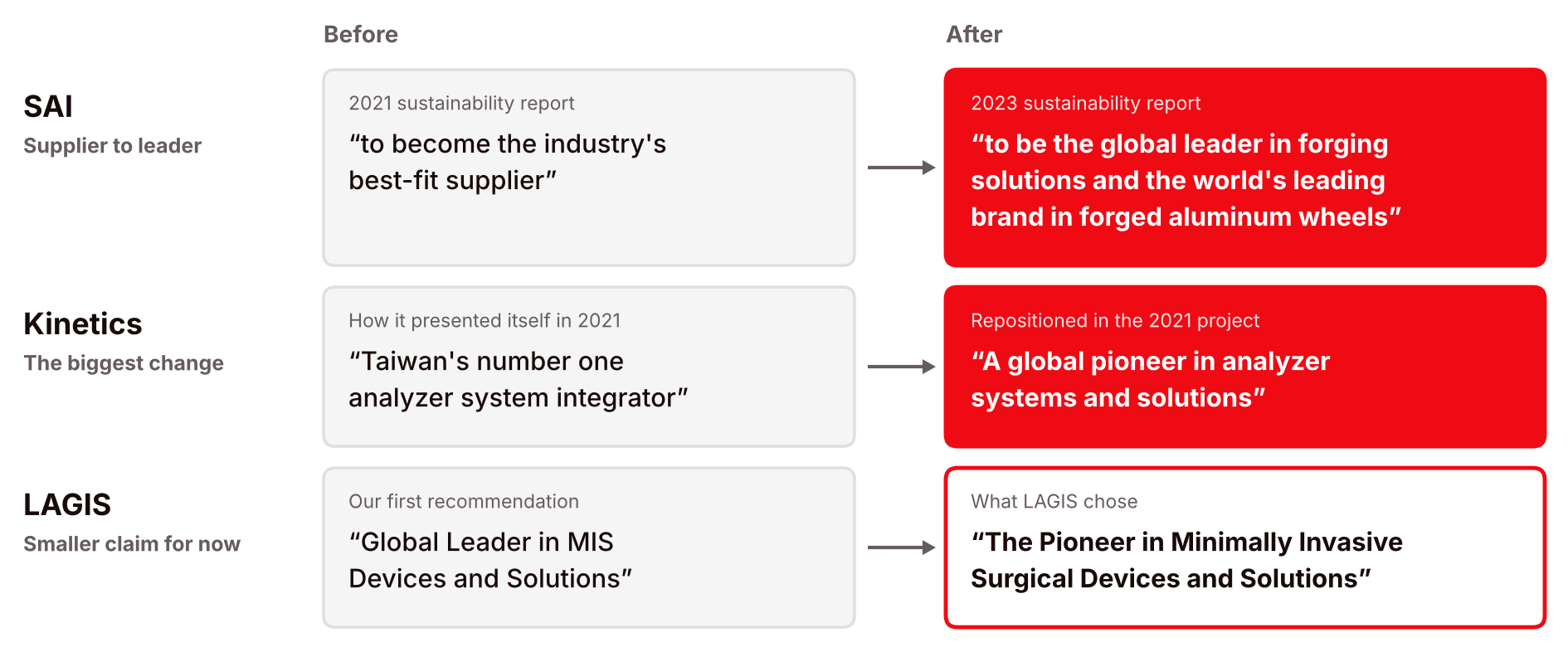
SAI’s 2021 sustainability report gave its aim in supplier terms: “to become the industry’s best-fit supplier.” Its 2023 report states the position from our 2022 project: “to be the global leader in forging solutions and the world’s leading brand in forged aluminum wheels.” Our first line was “a global leader in metal solutions,” and it was wrong. SAI’s team and ours both saw the problem, since “metal” could place SAI alongside raw-material producers. The final line names forging.
LAGIS went the other way. Our first recommendation was the bolder “Global Leader in MIS Devices and Solutions.” LAGIS’s managers wanted to earn that title before claiming it. They chose “The Pioneer in Minimally Invasive Surgical Devices and Solutions” and kept “Global Leader” as the line to grow into.
Kinetics made the biggest jump. In 2021, it still presented itself as Taiwan’s number one analyzer system integrator, though it was ready to sell its own analyzers abroad. We repositioned Kinetics as a global pioneer in analyzer systems and solutions. Five years on, its homepage opens with “A True Leader in Global Analyzer Systems and Solutions,” followed by the brand description we wrote in 2021. Each of the three chose the size of its claim on purpose, with the interview findings in front of it.
Step four: put the position where strangers meet you
A position only works where people who don’t know the company first meet it. For each company, that was a different place.
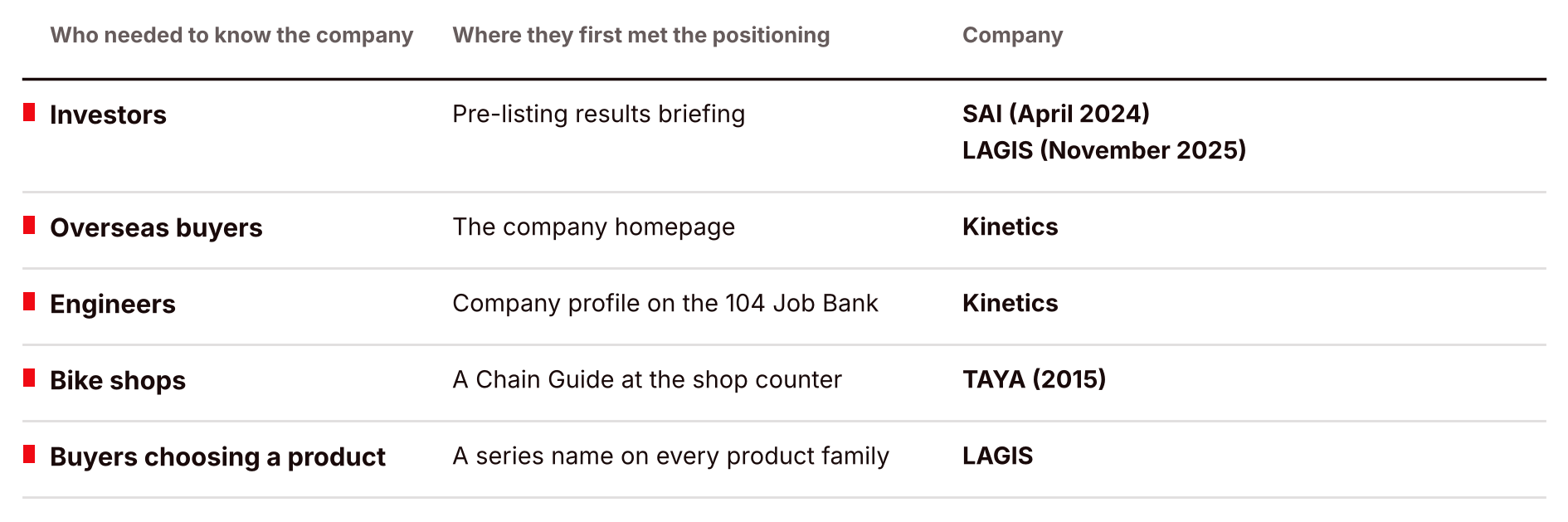
For SAI and LAGIS, it was an investor briefing. At its pre-listing results briefing on April 12, 2024, SAI presented forging as its core technology and its aim as forged-product solutions for the mobility industry. It listed on the Taiwan Stock Exchange on May 13, 2024. LAGIS opened its pre-listing briefing in November 2025 with the line from the project, then moved up to the Taipei Exchange on December 10, 2025. The listings are the companies’ own achievements. We can claim only that each went in with one clear account of itself. (Our article on rebrand timing covers the lead time before a listing.)
For Kinetics, overseas buyers came first and engineers came next. It competes for engineers with Taiwan’s largest technology companies, so we built an employer brand alongside the brand its customers see. Its company profile on the 104 Job Bank still opens with the recruitment line from our employer brand work: “We Grow, We Share, We Make An Impact.”

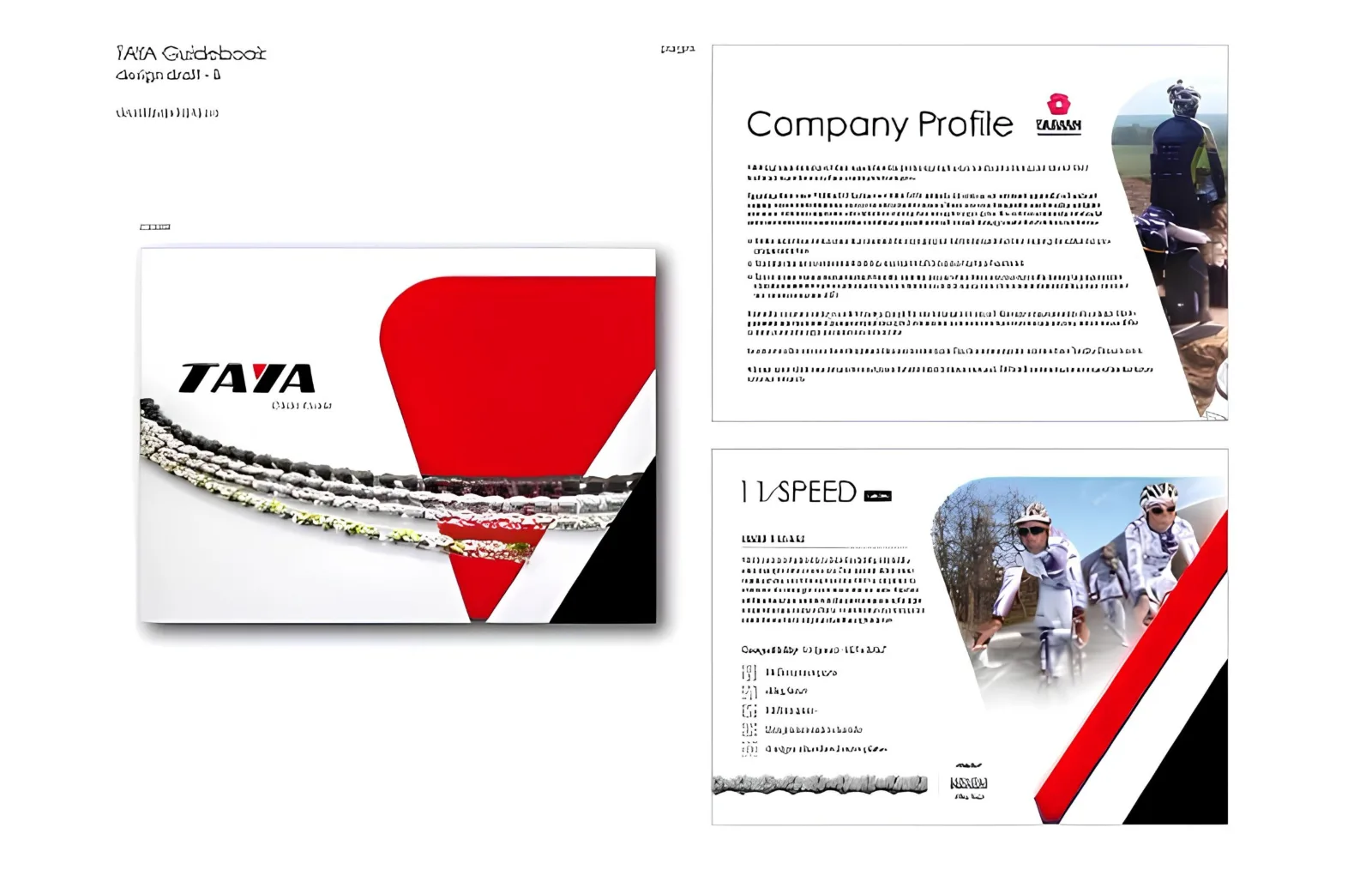
For TAYA, it was the shop counter. We produced a Chain Guide of about 20 pages to help shop staff sell and fit TAYA chains. After Eurobike 2015, TAYA told us many bike shops had asked for the Guide in their own languages, so we sent the design files for TAYA to produce local editions.
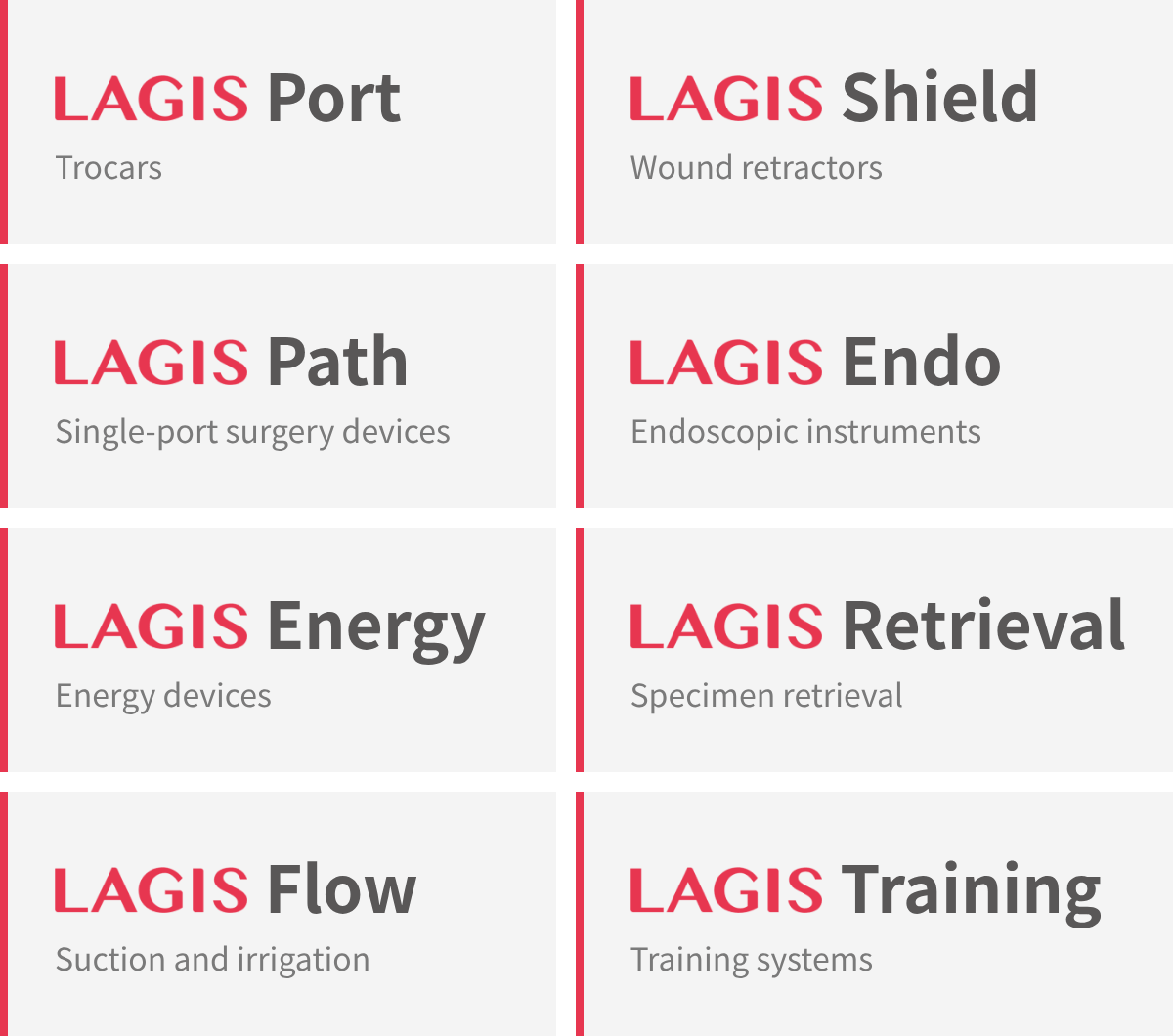
Buyers also need product names they can recognize and ask for. LAGIS now gives every product family a series name, eight in all, from LAGIS Port to LAGIS Training. Wafer Works showed the opposite problem in 2011. Each product carried the customer’s own part number, so the same wafer had several names inside the company, and Wafer Works looked like a follower.
When your technology ships inside someone else’s product
Most writing on ingredient branding points to GORE-TEX, the membrane consumers learned to ask for inside other companies’ jackets. Gore calls it an ingredient brand. There is nothing hidden about it anymore, and it shows how far that route can go. Our examples are closer to a B2B maker’s reality, and they start with names. (We have no case yet where an ingredient brand reached end consumers with a published result.)
AMEC is the clearest case, and the recommendations below are the ones we made to the company in 2022. For years, its engineering has worked inside products sold under well-known maritime brands. We recommended the tagline “Beyond Visible” and a line for customers: “We are the invisible engine for world-renowned brands.” We also recommended two names for two jobs: AMEC for its own products across four product lines, and the company name Alltek Marine for original design manufacturing (ODM) work. We proposed that split because brand owners can be uneasy when a supplier approaches them under its own brand. AMEC’s website still uses its pre-2022 positioning, and its 2026 product catalog still starts with the first page of the catalog we designed in 2023.
For a Taiwanese maker of woven outdoor fabrics, whose cloth ends up inside other brands’ garments, we recommended the company name as the corporate brand and its patented fabric technologies as named product series. We named nine fabric features, each with its own copy and visual mark, and designed header cards for its sample hangers at trade fairs. The purpose was practical: a buyer can ask for a feature by name.
Little King, a performance knit fabric supplier, was called a hidden champion in a United Daily News photo caption in December 2023. In a 2024 staff questionnaire, one of its managers wrote of wanting Little King’s fabric to carry its own hangtag on other brands’ garments, the way a well-known fleece brand does.
Intel’s “Inside” mark keeps coming up with clients. TAYA’s senior brand executive named it as the model in 2014, aiming for “TAYA Inside,” and SAI’s marketing head raised the same idea in 2022. These were ideas voiced by clients, and nothing was built. The idea carries a risk: a supplier that promotes its own name can make the brand owners it supplies nervous. That is why our AMEC recommendation kept ODM work under a separate company name. Get the brand architecture right before printing the sticker.
Branding Taiwan, and the clients who kept going
Five of the six main projects, those with LAGIS, Wafer Works, Kinetics, TAYA and AMEC, were selected and part-funded under Branding Taiwan, the Ministry of Economic Affairs program that helps Taiwanese companies build international brands. Geber is one of the program’s partner consultancies, and 16 of the 239 case pages on the program’s site name Geber as the consultancy.
Kinetics and T-Global, which was also a Branding Taiwan client, each chose a second program year, and TAYA came back after six years for a second project.
If your company leads its niche and is about to face people who have never heard of it, now is the time to start. Our brand strategy work begins with the interviews; the logo comes later, if it changes at all.
These companies spent decades earning the trust of people who already buy from them. Their next investors and engineers will meet the name before the product, so the name has to carry what the product already earned.
If you’d like to hear more about what we do at Geber, we have a regular newsletter: https://www.geberconsulting.com/newsletter/
Frequently asked questions
What is a hidden champion, and how is a Taiwanese one different from an ordinary small or mid-sized company?
A hidden champion leads a narrow global market while the public barely knows it. Simon’s 1990 definition sets three tests: the company is top three in its global market or first on its continent, its revenue is under 5 billion euros, and public awareness is low. That leading position in one niche, usually with sales in many countries, separates it from an ordinary small or mid-sized company. LAGIS, for example, sells under its own brand in more than 50 countries. Taiwan’s official near-equivalent is the MOEA Mittelstand program.
Does a hidden champion need a brand? Aren’t technology and word of mouth enough?
Word of mouth works on people who already buy from you. It runs out when the company needs someone new, such as an investor before a listing or an engineer with other offers. A housewares brand we worked with in 2011 learned this at a major European trade fair. The first time it exhibited alongside the world’s leading makers, its products matched theirs in design and function, and its pricing was fair. Buyers still trusted the known names more.
Should a hidden champion start with the logo or the positioning?
Start with the positioning. Wafer Works kept its logo and changed what it says about itself. All ten LAGIS distributors interviewed said the red logo had no effect on them, while two warned against changing it much, so the red stayed. In Geber’s rebrands, research and strategy take about a quarter of the time, the logo about another quarter, and guidelines and applications the other half. The logo matters; it comes after the words.
Who should know the brand first: overseas buyers or engineers?
Whoever the company needs for its next step. For SAI and LAGIS, that meant investors before a listing. Kinetics did both in order: its first program year set the position and identity for overseas buyers, and the second took the brand to its website, offices, recruiting and distributor tools. Its research also showed what wins trust overseas: a track record with Taiwanese plants is the proof buyers there ask for.
How long does it take, and what does it cost?
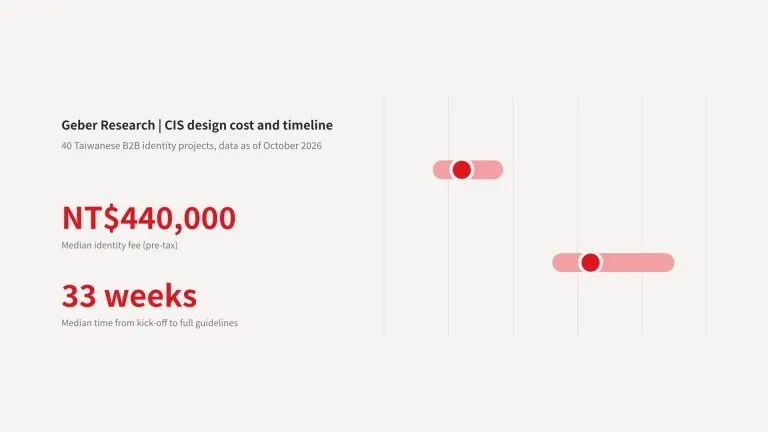
Brand strategy takes about two to three months, and a rebrand with a full corporate identity system (CIS) takes about five to six. Our starting prices before tax are NT$250,000 (about US$8,000) for positioning and core messages, NT$400,000 (about US$13,000) for a full brand strategy, and NT$600,000 (about US$19,000) for a rebrand with strategy and identity. Most projects come in above the starting price. Real projects also run longer than planned: across our identity projects since 2019, the median rebrand took 36 weeks against 24 planned, and most delays with a recorded cause came from waiting on client approvals. See our article on what a CIS costs for the full figures.
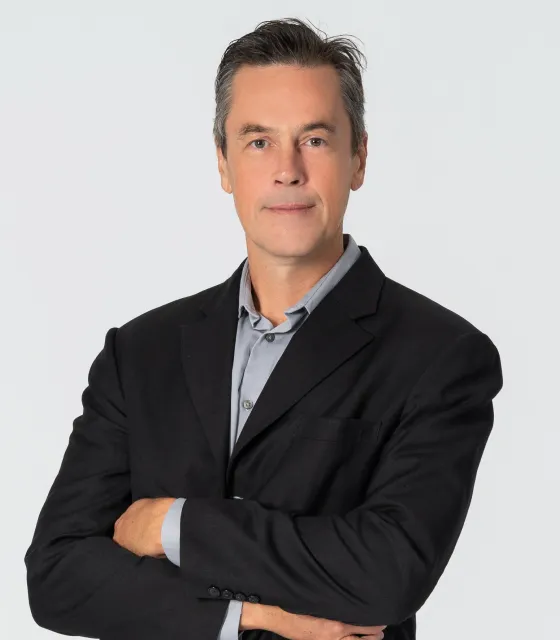
About the author. Richard deVries is the founder and CEO of Geber, a brand strategy and AI consultancy for B2B manufacturers, based in Taipei with offices in Tampa and Toronto. A Canadian who has lived in Taiwan for more than 25 years, he has spent over 20 years working with Taiwanese manufacturers and hidden champions on strategy and how they go to market. He hosts a monthly AI Roundtable for business leaders and writes about AI and Taiwanese industry for CommonWealth Magazine.
Richard deVries Founder & CEO, Geber Consulting
Grow Beyond Brands
If you’re curious about how brand consultants work and want to find an opportunity to properly examine your enterprise and brand, we’d love to chat over coffee.