In 2020 we made a corporate film for GIFU, a Taichung company that makes tool magazines and automatic tool changers, the units that hold and swap the cutting tools on a CNC machine. In the film, an alien spaceship crash-lands in Taiwan, and GIFU’s engineers build the part that gets it home.
It runs six minutes, and nobody in it says the words “tool changer.” My first reaction was that it was a little bit crazy, and if GIFU had asked me for brand advice, I would have pushed back. But it worked. They had a good gut instinct for it, and that made it stand out. The plot is the brand promise, and that is worth understanding for any Taiwanese manufacturer planning its next film.
Patrick Hu, our director, came up with the idea and made the film. I asked him to walk me through it.
Every booth plays the same film
GIFU sells to machine builders around the world and meets many of them at trade shows. In 2021, Business Weekly (商業周刊) profiled the company as a low-key hidden champion and the world’s largest maker of custom tool magazines, exporting to more than 30 countries.
When GIFU came to us in early 2020, the brief fit in one sentence.
“They go to trade shows and everybody has the same kind of film,” Patrick says. “So they wanted something different, something that catches people’s attention when they walk by.”
Anyone who has walked the aisles of a machine tool show knows the film he means (slow pans across a spotless factory floor, then the certificates). GIFU had already made one unusual film, a spy story with car chases, so the team was open to ideas most companies would kill in the first meeting. It also signed on just as the pandemic began canceling trade shows, in a year when Taiwan’s machine tool exports fell nearly 30%. Committing to a bold film that year took nerve.
From a Marvel portal to an alien rescue
Patrick started with the product. The tool magazine he saw at GIFU was a wheel that rotates cutting tools into place, and its shape reminded him of the circular portal Loki uses to reach Earth in The Avengers.
“I thought it was really cool that it automatically swaps tools. I’d never seen anything like that before,” he says. “For me, it’s something really advanced. When I think of advanced technology and the future, plus the Marvel idea, it all combined into pitching them an alien film.”
A second film shaped how the aliens appear on screen: Arrival, where you barely see the visitors. In GIFU’s film they stay a shadow behind a wall of light.
The story plays out like a short feature. Agents from Taiwan’s National Security Bureau arrive at GIFU’s headquarters and tell the boss, Mr. Liu, that the visitors can’t survive long in Earth’s atmosphere. “Mr. Liu, we don’t have much time.” His answer: “Well, gentlemen, I think you’ve come to the right place.” GIFU’s engineers get to work, and they find that only a rare element in meteorites can generate enough power. Two teams set off to find it, one to Saudi Arabia and one to Estonia. The first test comes up 20% short, so they go back to the core design until it works. Then they take the power source to the aliens themselves.

The plot is the brand promise
Strip out the aliens and the story is one GIFU’s customers know well. A machine builder needs a part that doesn’t exist yet, and needs it before the deadline.
Business Weekly’s profile has a real version. A foreign carmaker reported that its GIFU tool magazine had failed after five months. The spec said eight hours a day, and the line was running it around the clock. GIFU’s team redesigned the components within two weeks, and the carmaker became a regular customer, willing to pay more for later orders.
That is what GIFU’s customers pay for, and it’s why the film can skip the spec sheet. Patrick puts the message more simply. “The central thing of the film is basically that we can make anything happen,” he says. “Whatever the client needs.”
The brand sits inside the story, too. Once the ship is gone, the senior agent thanks Mr. Liu (“We couldn’t have done it without GIFU’s help”) and asks for the secret behind such a fast solution. On the way out, he spots the alien symbol on a display piece at GIFU’s headquarters, and that symbol echoes GIFU’s logo. “Mr. Liu, wait, is that…?” he asks, and Mr. Liu answers with a smile: “Some things are better kept secret.”
“We didn’t want the audience to think GIFU got its technology from aliens,” Patrick says. “So at the very end, the boss’s eye flashes a little blue. Everybody can interpret it however they want. Our idea was that he’s part of the alien story himself.”

For overseas buyers, the aliens are the hook. At a big machine tool show, they walk past dozens of Asian suppliers making the same claims about precision and quality. GIFU is the one they remember, and the film gives its sales team an easy opening at the booth.

How a bold idea gets made on a corporate budget
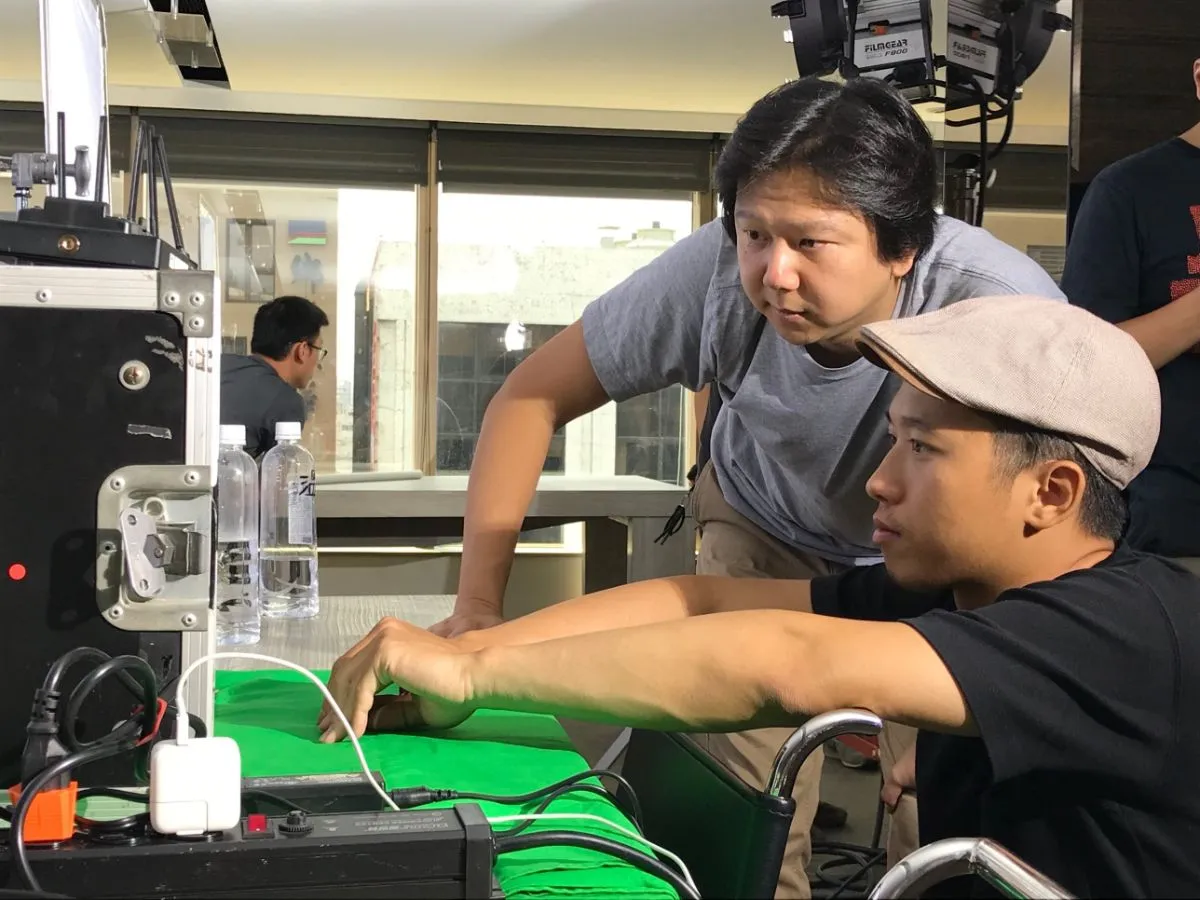
Bold ideas are easy to pitch and hard to make, so Patrick’s rule is that nothing goes to a client until the team has checked it can be made on the budget. For GIFU, that meant questions like whether there was an affordable green-screen studio near the client, and whether part of the cast could be found locally, since bringing every actor down from Taipei and putting them up in hotels gets expensive.
GIFU didn’t want its own people on screen, so every role went to an actor, with the cast coming in from Taipei and Kaohsiung. GIFU approved each one. One lead plays the boss and the others stand in for its engineers, so they had to look the part.
Most of the scenes were shot at GIFU’s headquarters over two long days in June 2020. On the first day, the crew left Taipei at 5:30 in the morning and finished that night in a green-screen studio in Taichung, where we shot the inside of the spaceship.

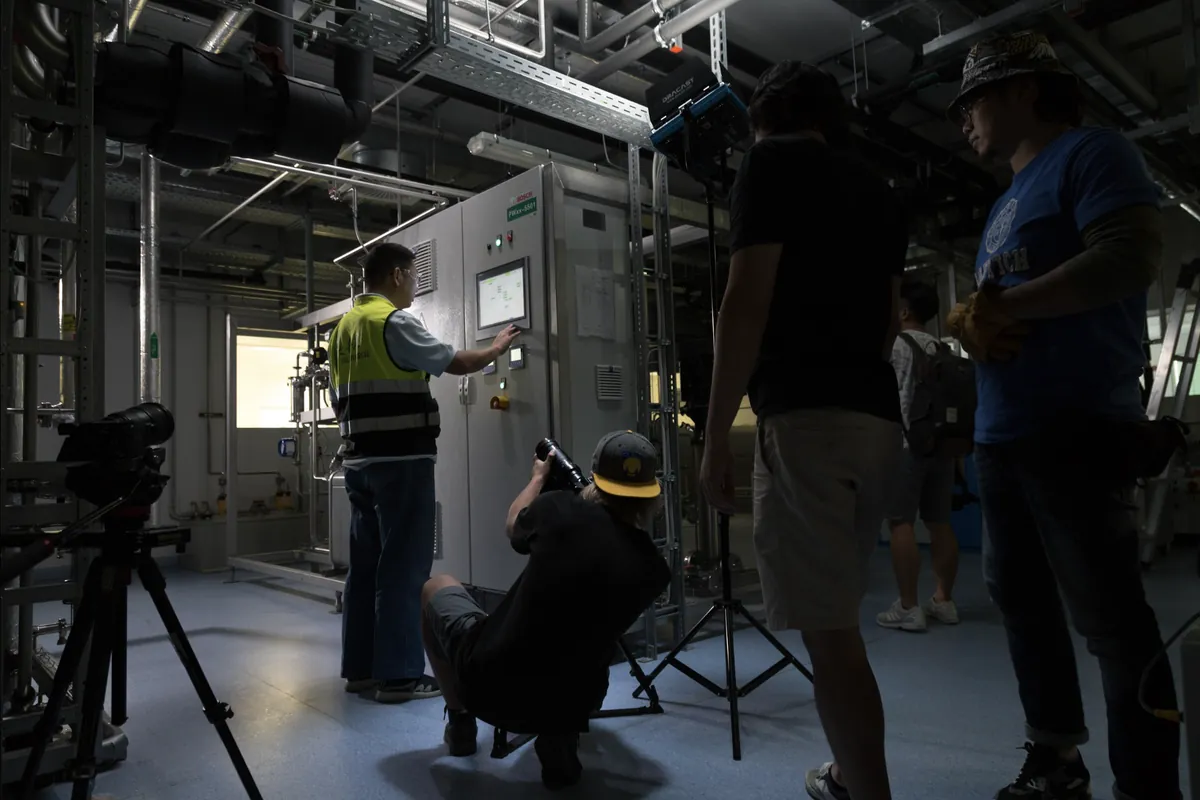
At headquarters, an art director turned a test room in the basement into the R&D lab, and we lit it blue to give it a high-tech look. For the desert scenes, the crew and cast went out by bus to the sand dunes. “The logistics were kind of a pain because we shot in various locations,” Patrick says.

The concept was so far from a normal corporate film that the storyboards had to carry it. Every scene came with reference images, so GIFU could see what it was signing off on. And since the film is built like a short feature, it has its own sound design.
“You can’t just put stock music in there that plays from beginning to end,” Patrick says. “So we hired a sound designer for the music and the sound effects.”
What we’d do differently: plan where the film goes
Asked what he would change, Patrick goes straight to what happened after we delivered it. GIFU used the film mainly at trade shows and on its website, and we didn’t plan how to promote it beyond that.
“It’s kind of sad,” he says of corporate films in general. “You spend so much time making it, and in the end maybe 50 people see it.”
A six-minute story works on a website and in sales meetings. A booth needs a short version that works in the few seconds people give it, ideally without sound, and LinkedIn needs short clips. Today we plan those versions in the brief, before the shoot, as our guide to planning a corporate video explains.
What any manufacturer can take from it
The film has brought in inquiries, Patrick says, though few clients are as open-minded as GIFU. Most companies won’t send their brand into space, and they don’t need to. The part that travels is simpler: find the problem your customers pay you to solve and build the story around it. Put the brand in the plot, then plan where the film will be seen before anyone picks up a camera.
Real people on screen matter more now than they did in 2020. “A lot of product video can be partially or completely done with AI,” Patrick says. “But anything that involves a real person, you need a crew to film it. If you use AI, people will think it’s probably fake.”
We plan and produce corporate films for Taiwanese manufacturers, and the first question we ask now is who will watch the film and what they should remember a week later. For GIFU, the answer was easy: the tool changer company that saved the aliens.
Frequently Asked Questions
Can a corporate film work without showing the product?
Yes, if the story carries what customers buy from you. GIFU’s film never explains how a tool magazine works. Its plot is a custom part built against an impossible deadline, which is the service GIFU actually sells, so buyers leave with the right idea about the company.
Why use actors instead of employees?
In GIFU’s case, the client preferred it, and a scripted story with dialogue needs people who can act. When we film real engineers and executives, we give them a situation and some direction, with no lines to learn, because people look most natural doing what they’re good at.
How do you make sure a corporate film gets seen?
Plan the versions before the shoot, starting with where each one will run. GIFU’s six-minute story suits its website and sales meetings, while a booth screen needs a short loop that works without sound.
About the authors. Richard deVries is the founder and CEO of Geber, a brand strategy and AI consultancy for B2B manufacturers, based in Taipei with offices in Tampa and Toronto. A Canadian who has lived in Taiwan for more than 25 years, he has spent over 20 years working with Taiwanese manufacturers and hidden champions on strategy and how they go to market.
Patrick Hu is Geber’s director. He has more than ten years of experience in video production across many industries and leads our production and photography team on B2B and B2C projects. He holds a degree in media and design from Northeastern University.
Planning a corporate film? We’d be glad to hear your idea and help you work out where it will be seen.