To market a tech company, decide what the company has to prove and to whom before anything is posted. In tech, the person on the other side is often an engineer, either a buyer’s engineer or one the company wants to hire. Applied Materials Taiwan’s LinkedIn following more than tripled from 4,658 to 16,611 between January 2024 and October 2025 while we at Geber ran its social media, and CHIMEI, the Taiwanese materials maker, had 33.3 million impressions from January to November 2025 on the LinkedIn page Geber ran.
Most people who search for tech marketing are looking for a job in it. This article is for the company’s side of the table: businesses deciding how to market themselves. Two kinds ask us this question: international tech companies with an office in Taiwan and Taiwanese tech companies selling abroad. We’ve done this digital work for B2B companies in Taiwan since 2016, and I’ve written a ten-year look back on it.
How tech marketing differs from consumer marketing
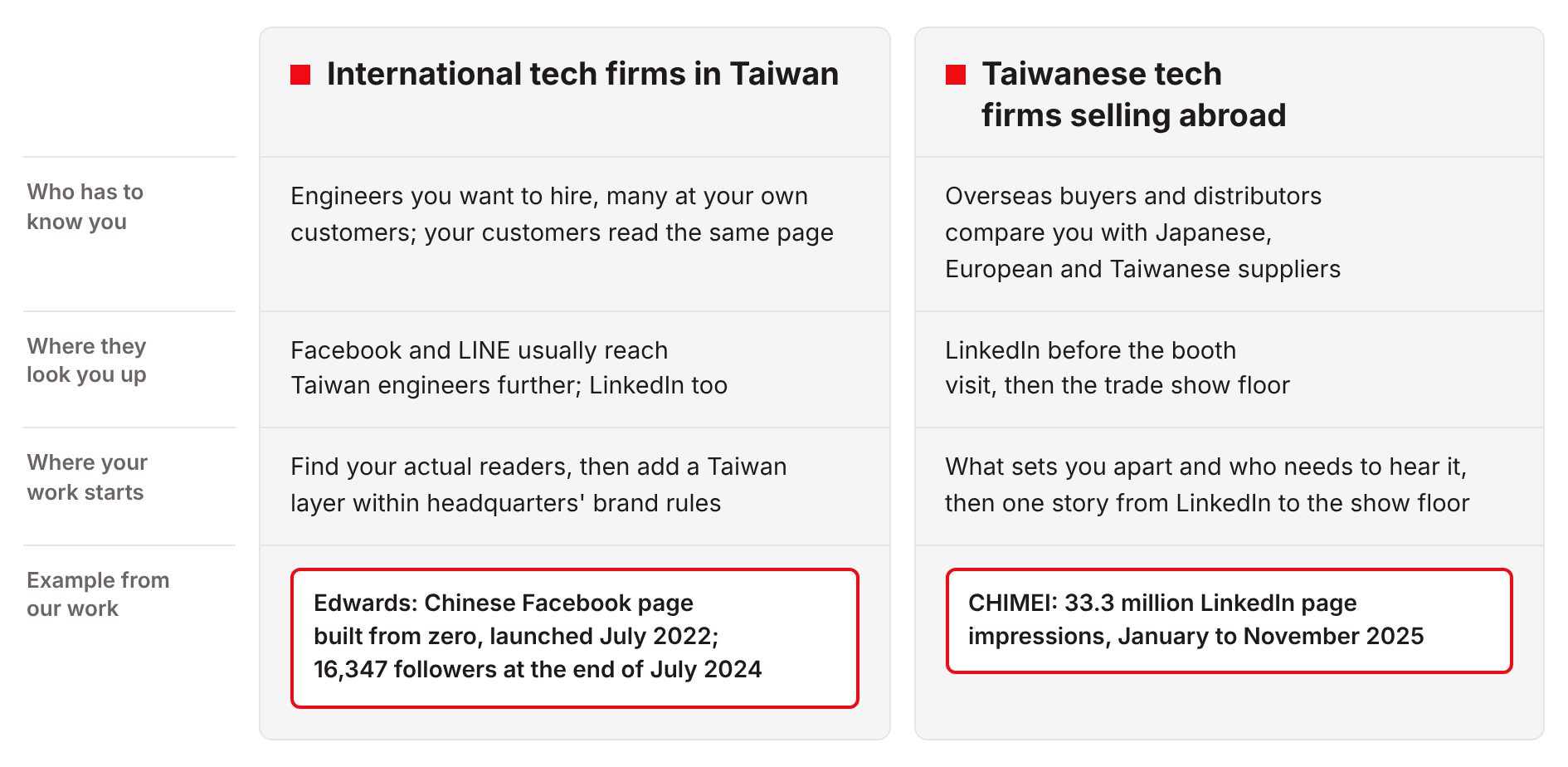
The buyers are few, and they already know the supplier. The chipmakers that buy from ASML know it well. When we worked with ASML Taiwan, the people it most needed to reach were engineering students and young engineers. They often recognized the name and had little idea what an ASML engineer did all day.
Much of the work in tech is aimed at engineers. The engineers who use the product and those the company wants to hire are often the same people. Many work for the company’s own customers, and those customers read the same page.
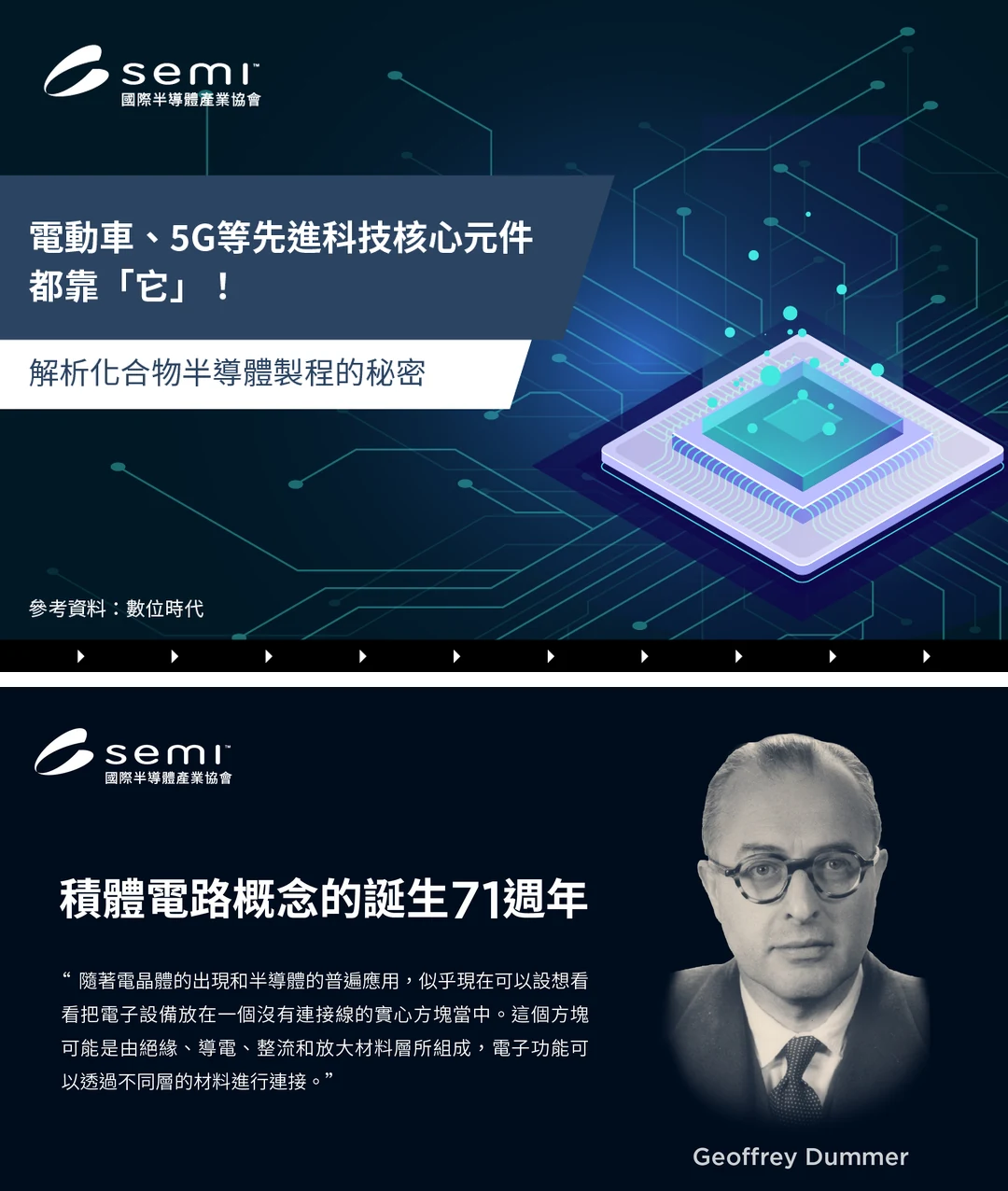
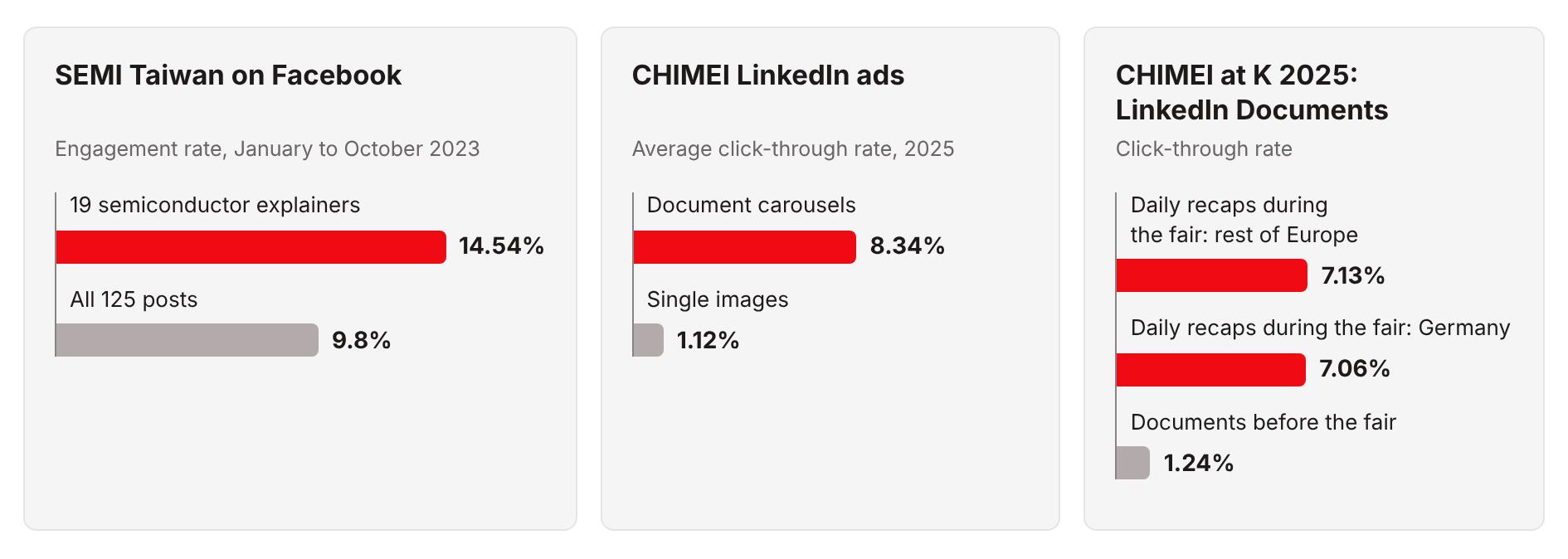
Content that teaches works with this reader. On the Facebook page we ran for SEMI Taiwan, the semiconductor industry association, the 19 semiconductor explainer posts published from January to October 2023 averaged an engagement rate of 14.54%, against 9.8% for all 125 posts.
International companies have another constraint. Positioning and brand rules come from headquarters, and so do the approval steps. The plan has to accommodate both from the first week.
I see the job this way: a tech company has to be understood by a small number of the right engineers and buyers, and that is a different job from getting noticed by a mass market.
International companies in Taiwan: a local voice under a global brand
Headquarters owns the brand; the audience is in Taiwan. The job is a Taiwan layer inside the global brand: local messages, content pillars and employer brand content within headquarters’ rules.
Find out who is actually reading
We worked with ASML Taiwan for nearly six years, May 2017 to January 2023. Its Facebook audience was future employees, so we planned the page as a recruitment channel from the first month.
We ran Edwards Technologies Limited’ page from July 2022 to August 2024. Before the first post, we worked out who it was for and what Edwards could say that bigger names in the industry could not. The audience was narrow and easy to find: engineers and technical graduates, plus engineering and science students.
The same habit guided ASML Taiwan’s 2022 live streams. In that year’s audience survey, 88.2% of young professionals with four or more years of experience worked outside semiconductors, and many came from aviation. We proposed an episode about moving from aviation into the semiconductor industry.
Review before planning
Our first annual review for Applied Materials Taiwan covered posts on three channels from January to September 2024 and compared results with four other semiconductor employers in Taiwan. One finding set the next plan: LinkedIn was growing fastest, its following doubling in those nine months from 4,658 to 9,389.
For MISUMI Taiwan, the factory automation parts supplier, we reviewed its dormant Facebook page and other automation brands’ pages in October 2023. A trial ran from December 2023 to March 2024, and we advised publishing at least two new posts before follower ads. Comics and guessing games drew no clear response; posts sharing technical knowledge, parts and their applications drew more interest. The page has grown from 1,035 followers in October 2023 to 13,281 at the end of February 2026.
Build the Taiwan layer
Every ASML Taiwan post followed global brand guidelines written in the Netherlands for an audience everywhere. Global messages needed local examples: Taiwanese engineers and career paths, in Chinese. In 2022, the plan followed ASML Taiwan’s local messages: a strategic partner to Taiwan’s chip industry, a responsible employer and a good corporate citizen.
We made the Taiwan recruitment film for ASML’s global Be Part of Progress campaign, working with headquarters to match its look, then ran the Taiwan campaign around a Chinese landing page. From August 31 to November 30, 2021, it made 20.4 million impressions, more than three times its target.
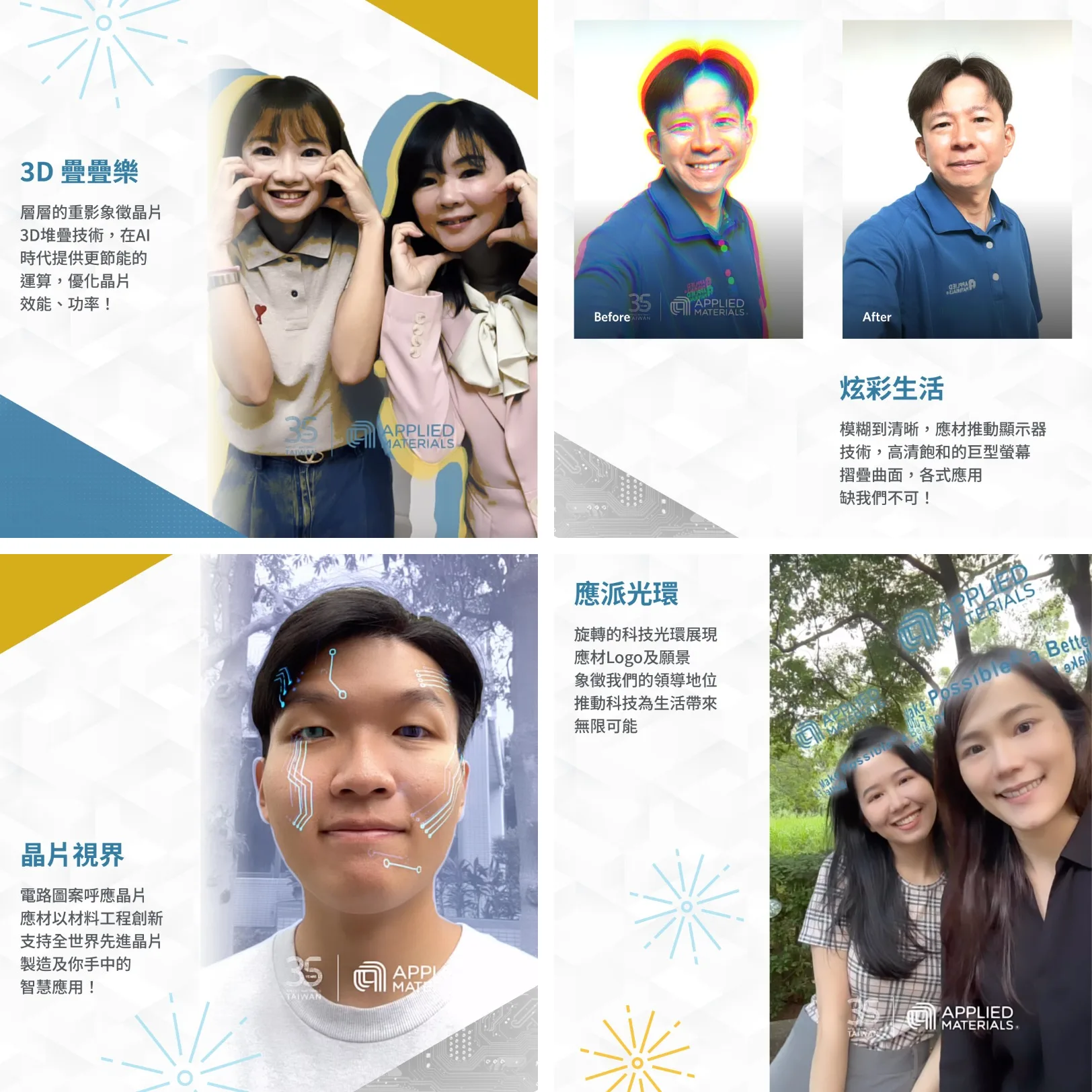
Applied’s posts followed the brand guidelines set by Applied’s headquarters in California, and one of four content pillars was Applied’s local perspective. For its 35th year in Taiwan, we wrote 三五同行,成就創新 (“35 years together, achieving innovation”) for the campaign running October 23 to November 24, 2024. Applied’s machines work at the scale of atoms inside other companies’ fabs, making them hard to show, so the campaign put the technology into four Instagram AR filters.
Give the local audience a Chinese voice
Edwards’ global channels spoke English to customers, and Edwards Taiwan had no Facebook page. We built one from zero. Its sustainability story lived in global presentations for customers and investors; in everyday Chinese, the same material gave an engineer a reason to choose Edwards beyond pay.
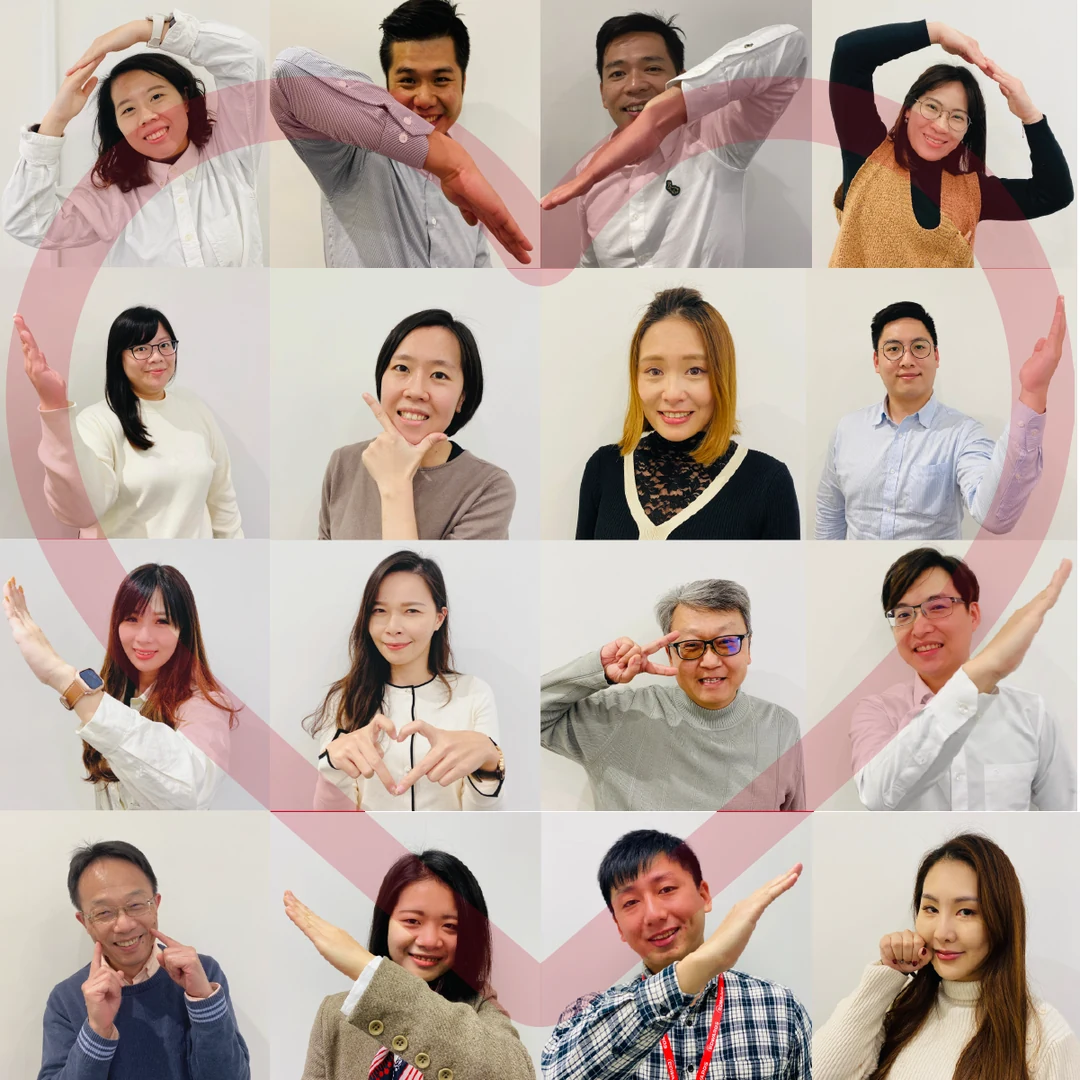
For Edwards’ 25th year in Taiwan in 2023, we built the people content around 愛的話大聲說 (“say it out loud”), a play on the sound of its Chinese name, 愛德華. Only the Chinese name allows that campaign. Launched in July 2022, the page had 16,347 followers at the end of July 2024. From June to December 2023, it had the highest Fanpage Karma performance index of six semiconductor company pages.
The pattern across these clients is consistent: headquarters owns the brand, and the Taiwan team owns the work of making it mean something locally.
Taiwanese tech companies selling abroad: known to buyers before the first meeting
Here the buyers are overseas. Most look the company up on LinkedIn before visiting its booth, and they compare it with Japanese and European suppliers and other Taiwanese companies. In B2B tech marketing, the work starts with what sets the company apart and who needs to hear it, then carries that story from LinkedIn to the trade show floor.
CHIMEI on LinkedIn
Our CHIMEI LinkedIn work ran from July 2022 to December 2025. CHIMEI used one global page, and by 2025 its ads targeted 16 countries across Europe, the Americas and Asia.
Regional campaigns outperformed country campaigns. Grouping countries into regions from July 2024 enlarged each audience, lowering cost per click while engagement and follower growth rose. Each region wanted different materials, so each regional campaign carried its own product posts.
We organized the five Xingfu Exchange partner events for CHIMEI in four Southeast Asian countries from November 2023 to June 2025. At each, the first photos went out on LinkedIn the same day, and event photos were the strongest organic posts.
From January to November 2025, the page had 33,251,193 impressions, up 10% on the same months of 2024, while clicks rose more than sixfold from 207,655 to 1,325,214. People who saw the posts were far more likely to click.
CHIMEI at K 2025 in Düsseldorf
We built CHIMEI’s fair presence around one question: “Who is CHIMEI?” CHIMEI had its first independent booth at K 2025 in Düsseldorf, which ran from October 8 to 15, 2025. We organized its tagline, A Step Up, into six themes, each backed by something CHIMEI could show.
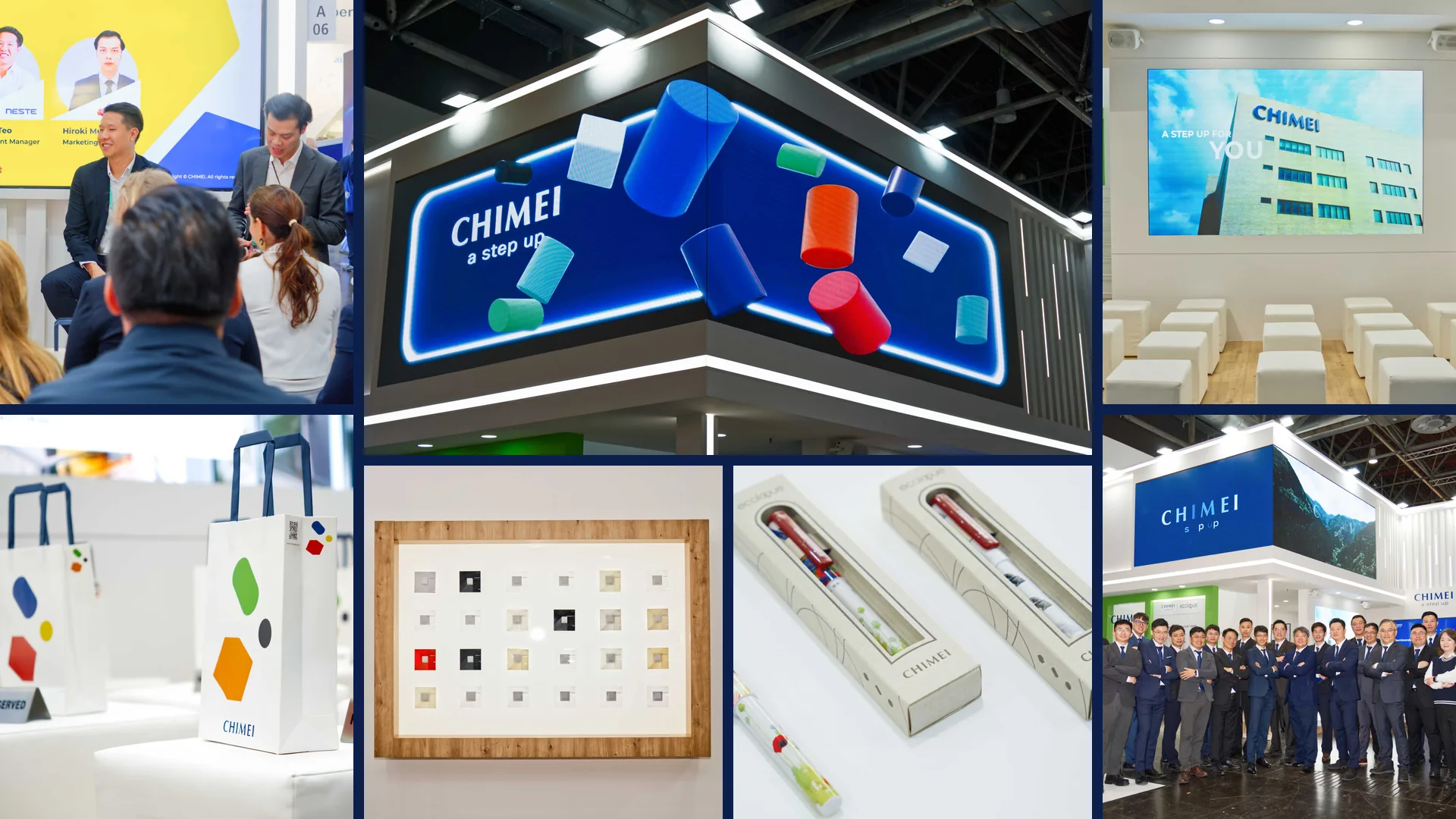
Evidence mattered because our review of how leading materials companies themed their K 2022 booths found that about 85% led with sustainability. A claim everyone makes needs proof behind it.
Promotional videos ran a month, two weeks and a few days before the fair, and awareness ads started September 17. Daily recaps ran during the fair with spending directed to Germany and the rest of Europe; from October 23, a recap video reached people who had engaged with earlier content.
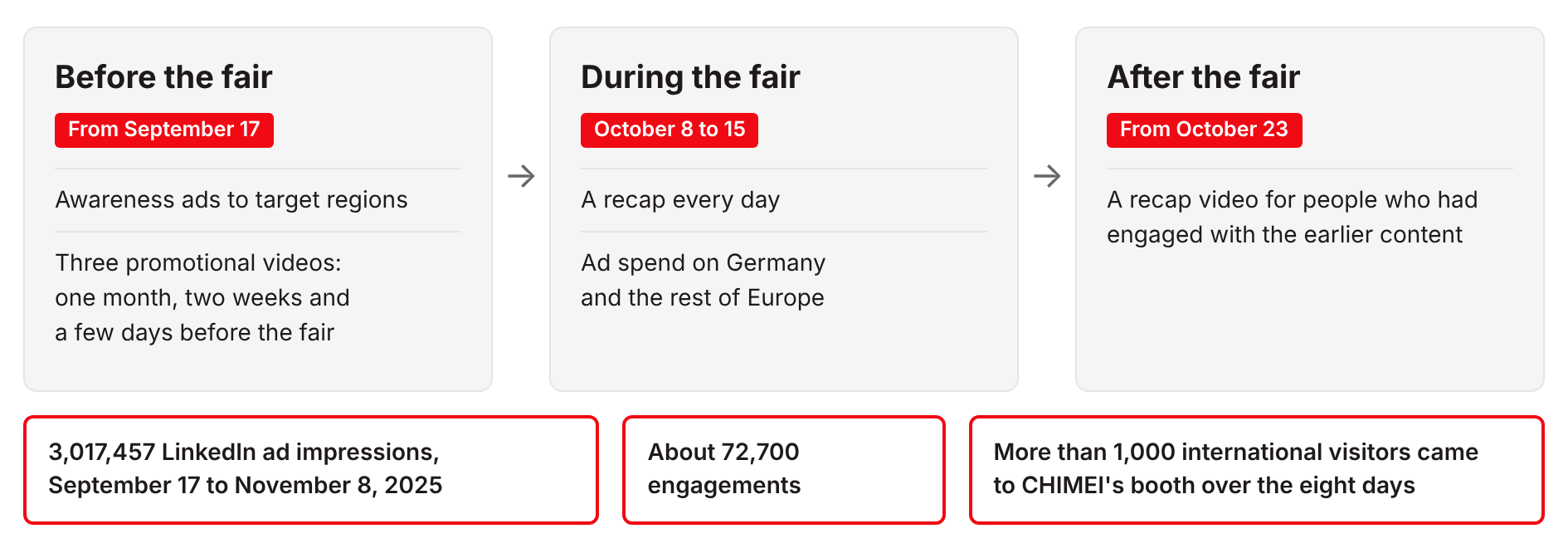
From September 17 to November 8, 2025, the ads made 3,017,457 impressions and about 72,700 engagements. More than 1,000 international visitors came to CHIMEI’s booth over the eight days.
Positioning before the sales materials
We worked with YCS, a semiconductor factory automation integrator, from September 2016 to January 2017. Branding Taiwan, the Ministry of Economic Affairs program that helps Taiwanese companies build international brands, selected and part-funded the project, and Geber did the work as one of the program’s partner consultancies.
YCS’s managers wanted the message fixed first. We positioned YCS as a full solution provider: one team for everything from the equipment on the plant floor to the data on a manager’s screen.
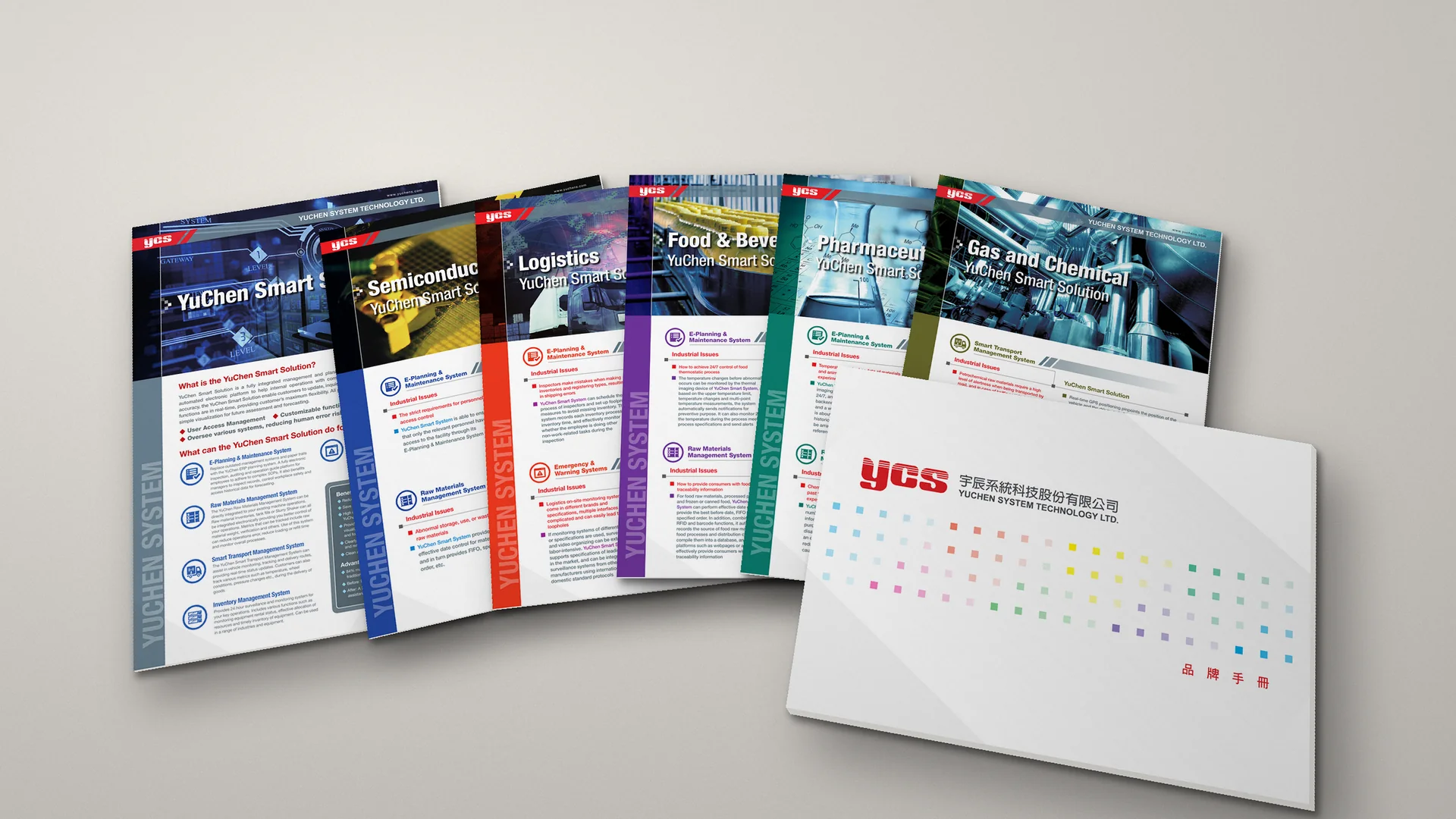
We regrouped its custom-named systems into five families named for the problems they solve, and produced a brochure for each of five target industries, setting the industry’s problems beside YCS’s solution. On January 6, 2017, we trained its managers and sales staff on the positioning and how to use the brochures and decks. Today, YCS’s homepage calls its ability to integrate its core advantage.
For the broader method, see our article on B2B marketing strategy. When the positioning itself has to change, that is a rebrand, and our article on rebranding a tech company covers when to do it; this article starts where positioning ends.
Channels for semiconductor marketing: LinkedIn, Facebook, trade shows and live streams
Our rule of thumb is LinkedIn for overseas buyers and distributors. For hiring engineers in Taiwan, Facebook and LINE usually reach further, so ASML Taiwan’s and Edwards’ employer brand work ran mainly on Facebook. ASML Taiwan’s page grew from 11,558 followers at the end of 2017 to 60,477 in January 2023.
Format matters on LinkedIn. CHIMEI’s Document carousels averaged an 8.34% click-through rate in 2025, against 1.12% for single images. Our LinkedIn strategy article goes deeper.
From the organizer’s side, our SEMI Taiwan work ran from March 2021 to December 2023. Posts started two weeks before each event: why SEMI held it, the industry topic behind it, then a recap. For SEMICON Taiwan 2022, we studied how CES, MWC Barcelona and IFA Berlin promoted themselves before planning three waves of posts from early July. SEMI Taiwan’s Facebook followers grew 84% over the three years. Our trade show guide covers the process in detail.
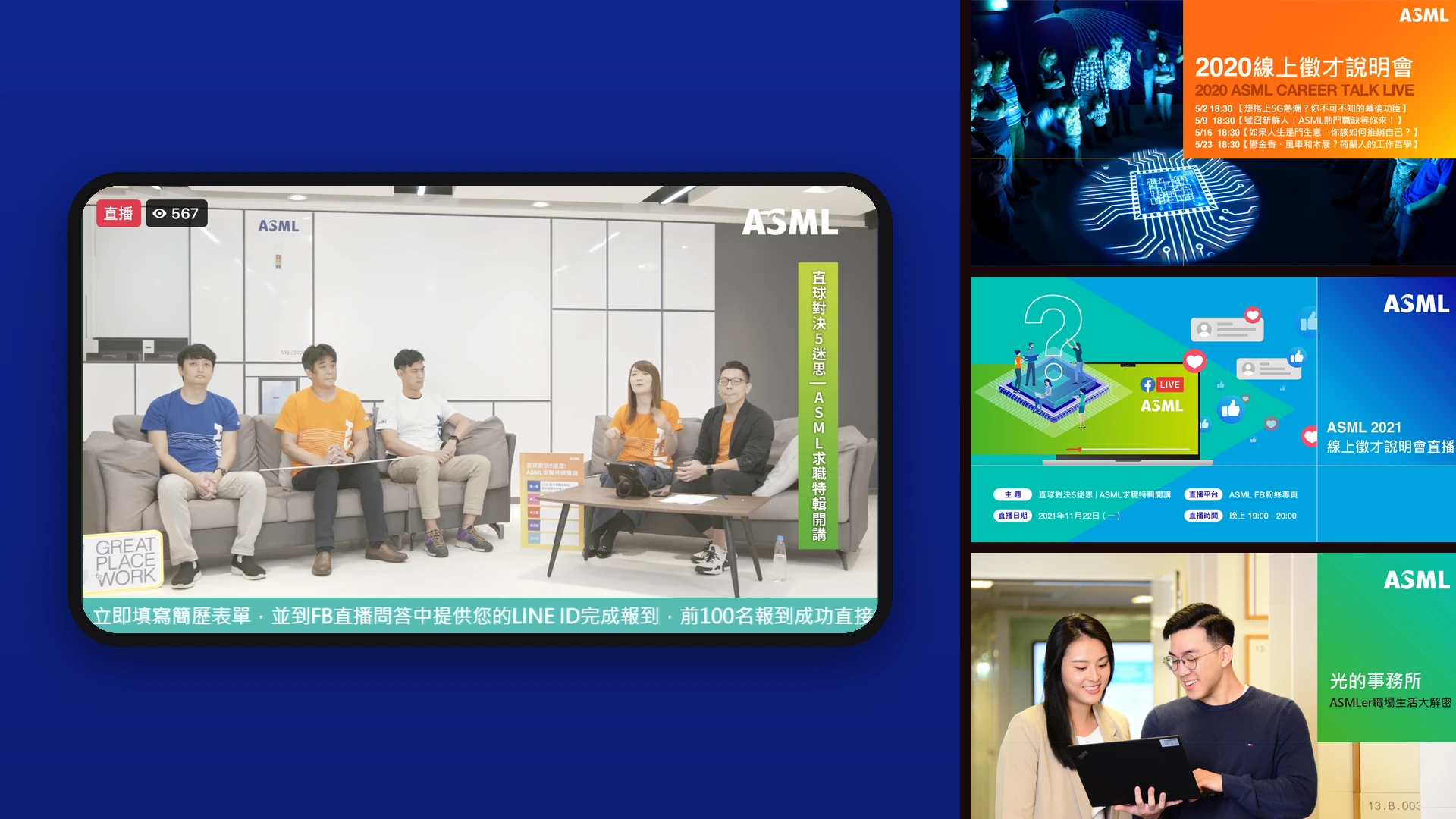
Live streams can serve hiring as well. When COVID canceled campus fairs in 2020, we turned ASML Taiwan’s career talks into a Facebook Live series, with sign-ups through the 104 job bank. The four episodes in May 2020 were watched by 56,571 people and brought in 2,302 CVs.
How to measure tech marketing
Agree the measures at the start with everyone who will judge them, purchasing included. For buyer marketing, track reach among the right roles, website visits and inquiries. For employer branding, track applications and event sign-ups.
Follower growth mostly follows the ad budget, so we report it next to ad spend. Likes can mislead. SEMI Taiwan’s humorous memes drew far more likes and shares than anything else, so we asked whether the reactions came from the professionals and students SEMI needed and served its business goals.
Other measures sit closer to the business. MISUMI Taiwan’s website and tracking tools are run by group headquarters in Japan, so we count unique clicks on short links for each post. These produced 19,681 unique clicks to MISUMI’s website in the first full year, April 2024 to March 2025.
After ASML Taiwan’s 2020 live streams, surveyed viewers rated how likely they were to consider ASML as an employer 9.5 out of 10, up from 8.5 before.
Monthly reporting lets each year’s data set the next year’s plan, as Applied’s two annual reviews did. This is the work Geber’s digital marketing and trade show team does.
If you’d like to hear more about what we do at Geber, we have a regular newsletter: https://www.geberconsulting.com/newsletter/
Frequently asked questions
How is tech marketing different from consumer marketing?
Tech marketing usually addresses few buyers who already know the supplier, and much of the work reaches engineers and future hires. The chipmakers buying from ASML knew it well, while ASML Taiwan needed engineering students and young engineers who often recognized the name without knowing what an ASML engineer did all day. Product users and potential hires are frequently the same people, and customers read employer content too. Teaching works with professionals: on the Facebook page Geber ran for SEMI Taiwan, the semiconductor industry association, the 19 semiconductor explainer posts from January to October 2023 averaged 14.54% engagement, against 9.8% for all 125 posts.
Do semiconductor and B2B tech companies need to be on LinkedIn?
Yes for reaching buyers abroad, because LinkedIn is the main platform for overseas buyers and distributors. CHIMEI reached buyers in 16 countries through one global page that Geber ran, generating 33.3 million impressions and 8,496 new followers from January to November 2025. LinkedIn also grew fastest for an employer: Applied Materials Taiwan’s following more than tripled over 22 months, from 4,658 to 16,611 between January 2024 and October 2025, while Geber ran its social media. For hiring engineers in Taiwan, Facebook and LINE usually reach further, so ASML Taiwan’s and Edwards Technologies Limited’s employer brand work ran mainly on Facebook.
How does an international company in Taiwan build a local voice within headquarters’ brand rules?
Plan around headquarters’ rules and approval steps from the first week, then build Taiwan messages and content pillars inside the global brand. Every ASML Taiwan post followed global guidelines written in the Netherlands, so Geber’s content showed Taiwanese engineers and Taiwanese career paths, in Chinese. The Taiwan run of ASML’s global Be Part of Progress campaign made 20.4 million impressions from August 31 to November 30, 2021. Edwards Technologies Limited’s global channels spoke English to customers, so Geber built a Chinese Facebook page for engineers. For Edwards’ 25th year in Taiwan, in 2023, the campaign ran on 愛的話大聲說, a play on Edwards’ Chinese name, 愛德華.
What should a Taiwanese tech company do before and after a trade show to win overseas customers?
Before the show, build target account lists, run LinkedIn campaigns and send invitations that book meetings in advance. For CHIMEI at K 2025, Geber organized the story around “Who is CHIMEI?” and released promotional videos a month, two weeks and a few days before the fair. During the show, coordinate booth visuals, live content and lead capture. CHIMEI’s daily recap Documents shown in Germany and the rest of Europe had click-through rates of 7.06% and 7.13%, against 1.24% for the Documents that ran before the fair. The first one to two weeks afterward matter most: from October 23, 2025, a recap video went to people who had engaged with the earlier content. Our trade show guide explains the process.
Which results should tech marketing be measured on?
Agree the measures with everyone who will judge them, purchasing included. For buyers, track reach among the right roles, website visits and inquiries; for hiring, track applications and event sign-ups. Followers mostly follow the ad budget, so report them next to spend. Useful examples include MISUMI Taiwan’s 19,681 unique clicks on Geber’s short links in its first full year, April 2024 to March 2025. Geber produced ASML Taiwan’s four 2020 live streams, and 2,302 CVs came in through the registration page on the 104 job bank. Surveyed viewers afterward rated their likelihood of considering ASML as an employer 9.5 out of 10, against 8.5 before.
What to do next
The buyer or engineer will look your company up before the first meeting, so decide now what they should find. If you want to work that out, book a 30-minute call with me through our contact page, or read more about Geber’s digital marketing and trade show work.
About the author. Richard deVries is the founder and CEO of Geber, a brand strategy and AI consultancy for B2B manufacturers, based in Taipei with offices in Tampa and Toronto. A Canadian who has lived in Taiwan for more than 25 years, he has spent over 20 years working with Taiwanese manufacturers and hidden champions on strategy and how they go to market. He hosts a monthly AI Roundtable for business leaders and writes about AI and Taiwanese industry for CommonWealth Magazine.
Richard deVries Founder & CEO, Geber Consulting
Grow Beyond Brands
If you’re curious about how brand consultants work and want to find an opportunity to properly examine your enterprise and brand, we’d love to chat over coffee.